
12 Cat Sleeping Positions and What They Mean
Cats spend a large portion of their lives sleeping, often resting between 12 and 16 hours a day. From curling into tight balls to raising their bellies-up, cats can take up different sleeping positions, and how they choose to sleep can offer clues about how they're feeling. Understanding the possible meanings of cat sleeping positions can help you learn more about your cat's comfort, health, and sense of security.
Why Do Cats Sleep in Different Positions?
Cats sleep in different positions depending on factors such as comfort, temperature, surroundings, and how relaxed they feel. Some cat resting positions help conserve warmth, while others allow cats to cool down, stretch out, or stay aware of what is happening around them. Age can also influence sleeping habits, with kittens generally sleeping longer as they grow and develop. Different kitten sleep positions may simply reflect their need for warmth, comfort, and a cozy place to rest.
What Do Different Sleeping Positions Indicate About My Cat's Mood or Health?
Cat resting positions alone can't tell you exactly how your cat is feeling, but they offer clues about how relaxed, comfortable, or secure they feel. Understanding the usual meaning behind different cat lying positions can help you recognize what's normal for your pet and spot potential concerns, especially when unusual sleeping positions appear alongside other symptoms.
12 Cat Sleeping Positions and What They Mean
1. Curled Into a Ball
When your cat curls up into a ball with their tail tucked around their body, they may be trying to stay safe, warm, and comfortable. This position helps conserve body heat while protecting vulnerable organs.
2. On Their Back
Seeing your cat sleep on their back with their belly up can be a sign that they feel relaxed and secure. This posture signals a high degree of trust because the stomach is one of the most vulnerable parts of the body.
3. Side Sleeping
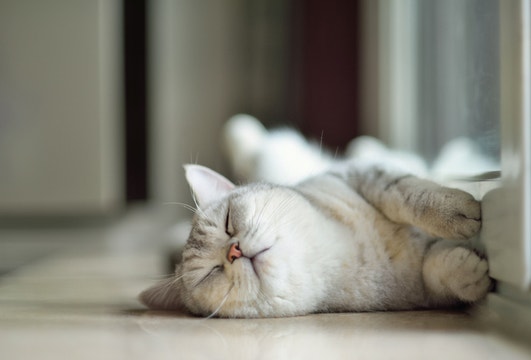
A cat stretched out on its side is often enjoying deep, restorative sleep. This position allows muscles to relax fully and typically shows that the cat is comfortable and not worried about potential threats.
4. Eyes Open or Half Open
Some cats appear to sleep with their eyes partially open, especially during lighter stages of sleep. Although this may appear unusual, it is normal behavior. Cats are naturally alert animals and may remain partially aware of their surroundings even while resting.
5. The Superman Pose
In the Superman pose, a cat stretches its front and back legs outward while lying on its stomach. Cats may simply find this position comfortable, especially when they're resting on a cool surface.
6. Perched on Furniture or Appliances
Cats often seek elevated sleeping locations such as bookshelves, cat trees, sofas, or even refrigerators. Sleeping high up gives them a better view of their surroundings while helping them feel secure.
7. Between Your Legs
If your cat enjoys sleeping between your legs, they may be drawn to the warmth and closeness you provide. It also gives them a cozy, sheltered space while allowing them to stay near someone they trust.
8. Sitting Upright
Sometimes cats doze while sitting upright or resting with their paws tucked beneath them. This position may be more common during a lighter nap when your cat is resting but still somewhat alert to their surroundings.
9. On Your Chest
If your cat likes sleeping on your chest, they may be drawn to your warmth, scent, and the comfort of being close to you. For many cats, resting on top of their pet parent is simply a cosy way to feel safe and connected.
10. Next to You
Some cats prefer sleeping beside their owners rather than directly on them. This allows them to stay close while maintaining their personal space.
11. On Your Head
Sleeping on or near a person's head may seem unusual, but many cats find it appealing. Hair provides warmth, and the head tends to remain relatively still throughout the night.
12. On Your Feet
Cats sometimes settle near their owner's feet while sleeping. This spot offers warmth and companionship while allowing the cat to move freely if desired.
The Language of Cat Sleep
Learning what different cat sleeping positions may mean can be a fun way to better understand your pet. However, knowing your cat’s usual sleep routine is even more important, as sudden changes may signal that something is wrong. If your cat starts sleeping more than usual, chooses unfamiliar places to rest, or changes their typical sleeping posture, especially alongside signs like low energy, reduced appetite, or discomfort, it may be worth speaking with your veterinarian. For more tips on cat behavior and wellbeing, explore the WHISKAS® cat care guides.