
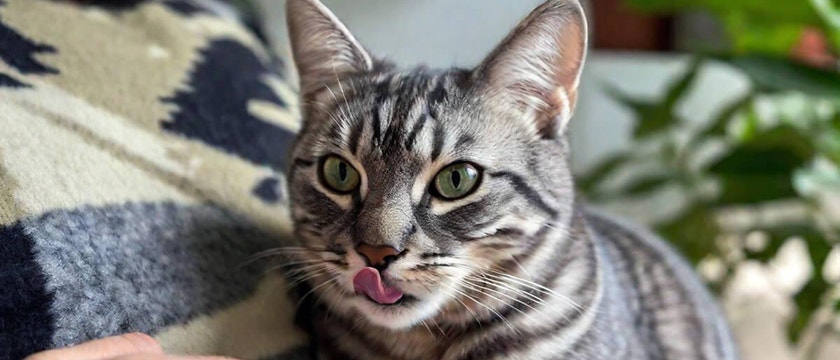
Why Do Cats Lick You?
Cats lick for many reasons. Some do it to bond, others to mark territory, and sometimes it’s simply a grooming instinct. When your cat licks you, they may be treating you like part of their family. Just as kittens lick their mother and siblings, adult cats extend this behavior to trusted humans. It’s their way of showing affection.
Why Do Cats Lick People?
Cats licking people is a universal feline gesture. It’s not limited to their owners; some cats will lick visitors or even strangers if they feel comfortable. This behavior can mean that they are:
- Displaying affection: Cats often lick to show love, similar to how dogs wag their tails.
- Signs of comfort: Licking releases endorphins, calming your cat.
- Showing curiosity: Cats explore the world through taste and scent. So, sometimes they just lick to see what or who they’re dealing with.
- Tasting: Human skin leaves traces of sweat that contain salt, minerals, and proteins that cats are drawn to.
- Scent sharing: Licking may help your cat leave its scent on you and recognize you as part of its social group.
- Attention seeking: Some cats lick people to encourage interaction, play, or feeding
Why Do Cats Lick Your Hands or Fingers?
Cats are naturally curious, so licking fingers can be their way of investigating. If you have recently handled chicken, fish, lotion, or another strongly scented item, your cat may notice the smell or taste on your hands and lick your fingers out of curiosity.
What Does It Mean When Cats Lick Your Face?
Face licking is the ultimate sign of trust. When a cat licks your face, it's their way of showing recognizing you as a part of their pack. Think of it as a social grooming behavior similar to how cats groom one another. But while sweet, it’s best to redirect this behavior with cat treats to avoid hygiene concerns.
Why Does Your Cat Lick Your Feet or Legs?
Feet and legs carry strong scents from shoes, socks, and the environment. Cats may lick them to investigate or to mark you with their scent.
Is It Safe To Let Your Cat Lick You?
Generally, yes, but with caution. Cat saliva contains bacteria that may irritate sensitive skin. Occasional licking is usually harmless, but avoid letting your cat lick open wounds, cuts, or irritated areas, as this may increase the risk of infection or worsen existing irritation.
Why It Hurts When Your Cat Licks You
Cats’ tongues are covered in tiny, backward‑facing barbs called papillae. These help them groom fur and tear food, but they feel rough on human skin. That’s why licking can feel scratchy or even painful.
How to Stop a Cat From Licking You?
Like kneading or scratching, licking is a natural cat behavior that should not be completely stopped. At the end of the day, licking can be your cat’s way of showing affection, so it is best to return the love by gently managing and redirecting the behavior towards positive bonding moments.
- Redirect with play: Use a toy or interactive play to shift your cat’s focus away from licking.
- Check your feeding routine: If your cat tends to lick around mealtimes, they may be seeking food or attention. Make sure they receive the right portions of complete and balanced cat food consistently.
- Provide enrichment: Regular play and stimulating toys can help reduce licking caused by boredom or attention-seeking.
- Avoid punishment: Never scold. Cats respond better to redirection than punishment.
When to Contact a Vet About Cat Licking?
Cat licking is generally harmless but if it’s done excessively, it can be a signal of stress, anxiety, or an underlying medical issue. You can contact your vet if:
- Your cat licks constantly, ignoring food or play.
- Licking is paired with biting or aggression.
- Your cat compulsively licks objects.
- Your cat licks and bites one area intensely and repetitively.
- You notice redness, swelling, balding, and other signs of irritation on the skin.
- Your cat hides and avoids interaction.
How to Use WHISKAS® Cat Treats to Reinforce Positive Behavior?
Cats may lick as a way of showing affection. Serving cat treats can be a simple way to return that love, strengthen the bond between you and your cat, and encourage positive behavior through rewarding interactions.
- Reward calm behavior: Once your cat stops licking and settles down, reward your cat.
- Redirect attention: Use cat treats to shift focus from licking skin to licking a safe, tasty snack.
- Encourage bonding: Feed them treats by hand to strengthen trust.
- Promote health: Choose healthy cat treats that support hydration and nutrition.
When choosing cat treats, consider WHISKAS® Creamy Treats as a simple way to create meaningful bonding moments with your cat. Their smooth, lickable texture makes treat time more interactive, while their delicious taste and added functional benefits give your cat a little extra care with every serving.
Licks, Love, and Treats
Cats lick for many reasons, including affection, curiosity, comfort, and instinct. So, the next time you wonder, “Why does my cat lick me?” remember that it may be their way of showing that they feel safe and connected to you. By understanding this natural behavior, you can respond in a way that supports a happy and trusting bond. To learn more about cat behaviors, breeds, and health, take some time to explore the WHISKAS® blog for more insights about cat parenting!