

Kitten Feeding Guide: What & How to Feed Your Newborn Kitten
There’s nothing quite as exciting as bringing home a new kitten. Naturally, as a cat owner, you’d want to give your kitten the best start in life. One of the most important parts of kitten care is knowing what to feed kittens and how to feed a newborn kitten.
For the first 4-5 weeks, kittens rely completely on their mother’s milk. But because they grow so quickly, their nutritional needs change just as fast. Beyond milk, you may be wondering what kittens eat and how many times a day a kitten should eat to stay happy and thriving.
To make things easier, we’ve put together this simple feeding guide to help your newborn kitten develop into a healthy, playful adult cat.
What Do Newborn Kittens Typically Eat?
In the first weeks of life, a newborn kitten’s diet is simple, and it primarily drinks its mother’s milk. This natural food is perfectly designed to provide all the protein, fats, and essential nutrients your kitten needs to grow strong and healthy. It also contains antibodies that help protect kittens from illness during these early, vulnerable weeks.
If the mother cat isn’t available or isn’t producing enough milk, newborn kittens can be bottle-fed(open in new tab) with a specially formulated kitten milk replacer. These kitten formulas are made to closely mimic the nutrition in a mother cat’s milk, ensuring your little one still gets the right start in life. Avoid feeding kittens cow’s milk(open in new tab) as it can upset their stomach and cause diarrhea.
When are Kittens Ready for Kitten Food
Kittens usually start showing signs that they’re ready for solid food at around 4 weeks of age. This is when their tiny milk teeth begin to appear, making it possible for them to chew soft foods in addition to nursing. At this stage, you can begin introducing a small amount of specially prepared wet kitten food alongside their mother’s milk or formula.
By 5-6 weeks, kittens become more curious about their surroundings and are eager to explore new tastes and textures. Offering a mix of wet food and softened dry food allows them to experiment and gradually adjust to solid meals. If your kitten is being bottle-fed, this is also the right time to start replacing some formula with solid food to encourage weaning(open in new tab).
Most kittens are ready to transition fully to solid food by 7-8 weeks of age. During this period, you can slowly reduce nursing or formula feeding while increasing the amount of solid kitten food. Choosing a high-quality diet designed specifically for kittens ensures they get the complete and balanced nutrition needed for healthy growth.
Best Food for Kittens
Kittens have different nutritional needs from adult cats. Because of this, many owners find themselves wondering what to feed their kittens. The answer is a specially formulated kitten food that's tailored to support the needs of this life stage.
A complete and balanced kitten diet(open in new tab) should provide:
High-quality protein for strong muscles and proper development
More calories than adult cat food to fuel their rapid growth
Essential minerals like calcium, phosphorus, magnesium, zinc, and iron for strong bones and teeth
Vitamins C and E to support a healthy immune system
DHA and other fatty acids for brain development and vision health
Whether you choose wet kitten food, dry kitten food, or a mix of both, the important thing is that your kitten gets the nutrients they need in a form they’ll enjoy. Since kittens can inherit food preferences from their mother, offering a variety of tastes and textures early on can help them adapt more easily.
Whiskas® Food Recommendations
Every cat parent has wondered at some point: what do kittens eat? Whether it’s dry food, wet food, or both, WHISKAS® offers a wide range of tasty and nutritious meals made especially for cats and kittens.
WHISKAS® cat food(open in new tab) is packed with essential nutrients such as protein, vitamins, carbohydrates, and fiber. Protein supports energy and strengthens the immune system, vitamins help maintain healthy skin and a shiny coat, while carbohydrates and fiber promote good digestion. All the vital nutrients your kitten needs can be found in WHISKAS®, ensuring they get the complete and balanced nutrition required for healthy growth.
Wet Food for Kittens
WHISKAS® wet kitten food(open in new tab) is crafted with high-quality ingredients to provide delicious meals that are easy for young cats to enjoy. Its soft texture is gentle on tiny mouths and ideal for teething kittens who are just learning to chew. Wet food also has a naturally higher moisture content, helping your kitten stay hydrated while enjoying mealtime.
Dry Food for Kittens
WHISKAS® dry kitten food(open in new tab) is designed to deliver both nutrition and crunch. The kibble texture helps clean developing teeth and supports healthy gums, making it an excellent complement to daily oral care. Dry kitten food can be served as is or mixed in with wet food for a yummy and nutritious meal!
Shop WHISKAS® Kitten Food
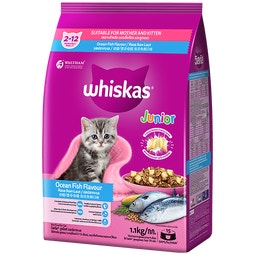
WHISKAS® Junior Ocean Fish Dry Cat Food
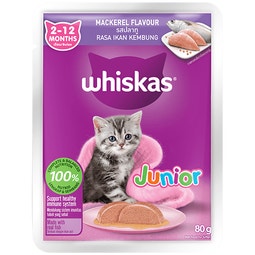
WHISKAS® Junior 2-12 Months Mackerel Flavour
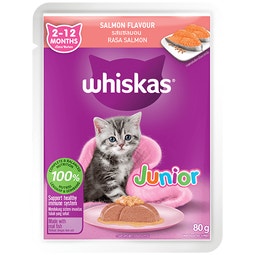
WHISKAS® Junior 2-12 Months Salmon Flavour
Kitten Feeding Guide
As your kitten grows, both their feeding patterns and nutritional needs change quickly. To make sure your little one gets the right amount of nourishment, it helps to follow a kitten feeding chart as a general guide.
The amount of food your kitten needs will depend on factors like age, weight, and the food you are serving. Since kittens grow at different rates depending on their breed and body frame, the chart should be used as a reference point, not an exact rule. For the most accurate advice, it’s always best to check with your veterinarian, especially if your kitten has unique needs. But as a start, here’s our kitten feeding guide.
From birth to 2 months old:
Kittens feed on cat milk from their mother. At around 1 month old, you can introduce small bites of kitten food as they start to wean off cat milk.
2 to 4 months old:
Start with WHISKAS® kitten food. Feed kittens 4 to 5 pouches of wet kitten food per day. If your kitten is ready for a mixture of wet and dry food, reduce the amount of wet food to 2 pouches and feed 18-40 g of dry kitten food accordingly. Feed them 4-5 times in a day
4 to 8 months old:
Increase the amount of wet kitten food to 5 to 6 pouches per day. If the kitten is on a mixed diet, use 2 pouches of wet kitten food and 40-48 g of dry kitten food. Feed them 4-5 times in a day.
8 to 12 months old:
Feed kittens 6 to 7 pouches of wet kitten food per day, or a mixture of 2 pouches of wet kitten food and 48 g of dry kitten food. Reduce the feeding frequency to 2-4 times in a day.
How Many Times to Feed a Kitten
Besides knowing what to feed newborn kittens, we also need to know how many times to feed kittens. Kittens should be fed frequently in small amounts throughout the day. For kittens over 2 months old, kitten food can be given 4 to 5 times a day. From 6 to 12 months old, the number of meals can be reduced to 2 to 4 times a day. If you’re feeding dry food, you can choose to leave a bowl of dry food out for your kitten to eat through the day. You can also divide wet food in half and feed your kitten twice a day.
Feeding Snacks and Treats
What do kittens eat besides kitten food? The answer is: treats! As owners, feeding our fluffy friend snacks and treats is always a joy. Many manufactured cat treats are designed to support digestive health, dental health, or overall health. Bear in mind that cat treats contain more calories and are not nutritionally complete and balanced compared to cat food. So, you should only give treats occasionally or as rewards. This prevents the risk of overfeeding and an unbalanced diet. If you give them any treats, be sure to reduce their main meal by an equal amount. This is an important part of how to feed a kitten.
Feed Your Kitten Right for a Strong Start in Life
Raising a kitten is an enriching experience and one of the most important parts of care is ensuring they get the right nutrition. From their first weeks on their mother’s milk or kitten formula to the gradual introduction of solid food, knowing how to feed your kitten well will make all the difference in raising a healthy and happy cat.
For more expert advice on cat care, take some time to explore the WHISKAS® blog(open in new tab). From handy feeding guides to health and wellness advice, you’ll find useful tips that will help you across all stages of the pet parent journey!