
Can Cats Eat Dog Food?
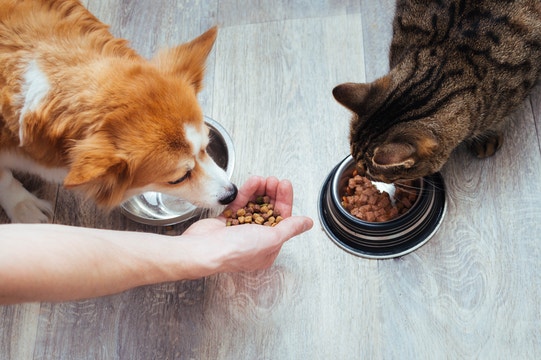
Has your cat ever wandered over to your dog’s bowl for a curious bite? Like many pet parents, you may have wondered: can cats eat dog food? While an occasional mouthful is unlikely to cause harm, there are plenty of reasons why dog food shouldn’t become a part of your cat’s regular diet.
Cats and dogs have different nutritional needs, which is why their food is formulated differently. Regularly feeding your cat dog food may create nutrition gaps which can affect their long-term health. If you’re caring for both cats and dogs, understanding these differences can help you make the right feeding choices for your pets.
KEY TAKEAWAYS
- Cats have different nutritional needs than dogs.
- Dog food does not provide enough taurine, arginine, and other essential nutrients for cats.
- Cats are obligate carnivores and require animal-based nutrition.
- Complete and balanced cat food should always be the main part of a cat's diet.
- WHISKAS® provides complete and balanced nutrition for cats at every life stage.
Is Dog Food Good for Cats?
No, dog food is not good for cats as part of their regular diet. Dogs are omnivores, so their food is formulated around different nutritional needs. Cats, on the other hand, are obligate carnivores and require specific nutrients such as taurine and arginine which are normally found in animal-based sources. So, while a small bite of dog food is not a cause for concern, regular consumption may cause long-term complications.
What Happens If Cats Eat Dog Food?
If your cat sneaks a small bite of dog food, there is usually no cause for alarm. Some cats may experience mild digestive upset, especially if the food is different from what they normally eat. The bigger concern comes when dog food regularly replaces your cat’s meals. Over time, this can create nutritional gaps that may affect their overall wellness. For example, not getting enough taurine can affect heart and eye health, while inadequate protein and other essential nutrients may affect your cat’s muscles, coat, and general well-being.
What's the Difference Between Cat Food and Dog Food?
The biggest difference comes down to how each food is formulated. Compared with dog food, cat food is generally made with:
- Higher protein levels: Cats naturally have higher protein requirements than dogs, so their food is formulated accordingly.
- Essential amino and fatty acids: Cats need nutrients such as taurine, arginine, and arachidonic acid in their diet to support normal body functions.
- Preformed vitamin A and other vitamins: Unlike dogs, cats cannot efficiently convert beta-carotene into vitamin A and also have different requirements for certain B vitamins such as niacin.
Can Cats Eat Dog Food in an Emergency?
Yes, healthy cats can generally eat dog food for a day or two in emergency situations. Dog food is not toxic to cats, so a few meals are unlikely to cause harm. Still, it should only be treated as a temporary option and should never replace complete and balanced cat food that’s specifically made for cats.
However, the situation may be different for cats with underlying health conditions or those on a special diet. If you’re unsure what to feed them temporarily, check with your veterinarian for the safest option.
Why Does My Cat Want to Eat Dog Food?
Cats may be drawn to dog food out of curiosity, because they enjoy the smell or taste, or simply because they want to investigate what another pet is eating. In multi-pet homes, easy access to shared feeding areas can also make dog food feel like an extra snack option, especially if it’s left out between meals.
I Have a Cat and a Dog. How Do I Feed My Multi-Pet Household?
If you have both cats and dogs at home, a few simple feeding habits can help prevent them from eating each other’s food:
- Feed them separately whenever possible: Giving each pet their own feeding space makes it easier to keep track of what they’re eating.
- Remove uneaten food after meals: This helps prevent curious pets from wandering over to another bowl later.
- Keep cat food and dog food in separate areas: Store and serve each pet’s food where it’s less likely to be shared accidentally.
- Make sure each pet gets food made for them: Cats and dogs have different nutritional needs, so their regular meals should be formulated specifically for their species and life stage.
Give Your Cat the Nutrition They Were Meant to Have
Cats are naturally curious, so it’s normal for them to show interest in all kinds of food, including what’s in a dog’s bowl. Still, the best way to support your cat’s long-term health is to make sure their everyday meals are made specifically for their nutritional needs.
At the end of the day, serving complete and balanced cat food is one of the simplest ways to help support your cat’s daily health and well-being. For more tips on cat care, feeding, and nutrition, explore the WHISKAS® blog for helpful advice.