
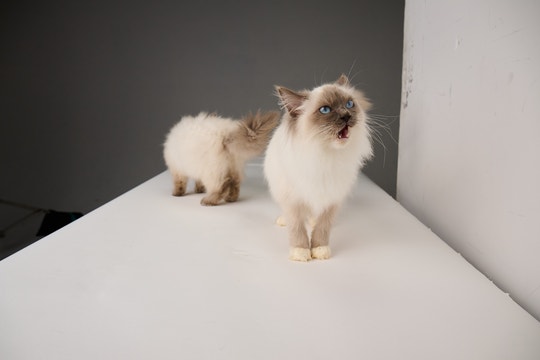
Himalayan Cat
If you’re captivated by a cat that combines the elegance of a Persian with the striking allure of a Siamese, the Himalayan Cat might just be a perfect match. Known for their dazzling deep-blue eyes, silky long coats, and gentle personalities, these beautiful felines make incredibly devoted companions.
Himalayan Domestic Cats are a crossbreed of the Persian and Siamese breeds, inheriting the Persian’s luxurious coat and calm disposition alongside the Siamese’s signature colorpoint markings. Whether you’re thinking of welcoming Himalayan kittens into your home or you’re already a proud fur parent to one, this guide covers everything you need to know about the Himalayan cat breed.
Himalayan Cat Physical Appearance
The Himalayan cat size falls in the medium-to-large range, and these long-haired felines have a look that's truly hard to miss. They carry a stocky, Persian-style body with a round, flat face, large deep-blue eyes, and a long, luxurious coat featuring dark colorpoint markings on the face, ears, paws, and tail. Their fluffy tail and small, rounded ears complete that signature plush, doll-like appearance that cat parents simply adore.
Himalayan Cat Personality and Temperament
One of the most endearing things about the Himalayan Cat temperament is how gentle and calm they tend to be They thrive in quiet environments and love nothing more than curling up beside their favorite person. The Himalayan cat personality strikes a lovely balance between affectionate and independent warm and devoted, but never loud or demanding.
Below is a quick look at how Himalayan Cats typically rank across different traits. Having a clearer picture of the Himalayan Cat temperament and care needs will help you determine if the breed is the right fit for your lifestyle.
Legend:
- ⭐ = Poor
- ⭐⭐⭐⭐⭐ = high/excellent
| Trait | Rating |
| Friendliness | ⭐⭐⭐⭐⭐ |
| Ability to adapt | ⭐⭐⭐⭐ |
| Behavior towards other pets | ⭐⭐⭐⭐ |
| Behavior towards humans | ⭐⭐⭐⭐⭐ |
| Playfulness | ⭐⭐⭐⭐ |
| Tendency to obesity | ⭐⭐⭐⭐ |
| Overall health | ⭐⭐⭐ |
| Life expectancy | ⭐⭐⭐⭐ |
| Easy to train | ⭐⭐⭐⭐ |
| Advisable for first-time owners | ⭐⭐⭐ |
Key Characteristics of Himalayan Cats
Himalayan Cat characteristics include a silky coat, color‑point markings, and other features that make them unique. Let’s take a look at their key characteristics.
| Average lifespan | Himalayan Cats’ lifespan is usually between 9 to 15 years |
| Weight | A Himalayan Cat’s weight typically ranges from 9-14 lbs for males and 7-11 lbs for females |
| Height | The height for this cat breed ranges from 10 to 12 inches |
| Coat | They have long, silky, and color-pointed coats |
| Size | Himalayan Cats’ size falls between medium to large |
| Personality | They are friendly, affectionate, calm, and moderately playful |
| Origin | Himalayans are a crossbreed of Persian & Siamese cats |
Keep in mind that these values can vary from one Himlayan Domestic Cat to another.
Himalayan Cat History
Himalayan Domestic Cat is a crossbreed with a fascinating backstory. The cat breeders in the US and UK created them in the mid‑20th century by crossing Persian cats with Siamese cats. The idea was to get the best of both worlds: the Persian’s long, silky coat and calm personality, plus the Siamese’s striking blue eyes and color‑point markings. By the 1950s, the breed was refined enough to gain official recognition. Also, the name “Himalayan” was borrowed from the Himalayan rabbit, which has similar color markings. Some cat associations consider them a Persian variant, while others recognize them as a distinct breed, but either way, they’re adored for their beauty and affectionate nature.
Types of Himalayan Cats
Himalayan Domestic Cat are usually classified based on their coat color and point patterns. Mentioned below are the different types of Himalayan Cats:
- Seal Point: cream body with very dark brown points
- Blue Point: bluish‑white body with slate‑gray points.
- Chocolate Point: ivory body with milk‑chocolate points.
- Lilac Point: glacial white body with pinkish‑gray points.
- Flame Point: cream body with reddish‑orange points.
- Cream Point: white body with pale cream points.
- Tortie Point: mottled points with mixed colors, usually female.
- Black Himalayan Cat (Seal Point look‑alike): not a separate type, but Seal Points often appear nearly black due to their very dark markings.
How Long Do Himalayan Cats Live?
The Himalayan Cat lifespan typically ranges from 9 to 15 years. But with consistent, attentive care, they can live as long as 16 to 20 years. Genetics, diet, grooming habits, and veterinary check-ups all play a major role in how long your feline companion thrives. Like other cat breeds, a proactive approach to care ensures that will help your cat live a longer life.
How to Care for a Himalayan Cat?
Important points to remember for Himalayan Cat care include:
- Brush their coat nicely, refresh water, and feed them their designated cat food.
- Keep them indoors in a cool environment where they can play or nap.
- Interactive play sessions, grooming touch‑up, and serving them proper meals and cat treats.
- Ensure weekly deep grooming, nail trimming, and health check.
- Give them a monthly bath and professional grooming if required.
Himalayan Cat Grooming and Maintenance
Here's how to groom a Himalayan Cat to maintain its unique look:
- Daily brushing: Use a slicker brush or metal comb to prevent mats and tangles on the coat, especially under friction areas like (underarms and belly).
- Eye care: Himalayans might face tear staining, which is a pretty common issue due to their flat face. Wipe gently with pet-safe wipes.
- Bathing: Make sure to bathe them every 4-6 weeks to control oil and build up, and keep the coat silky smooth.
- Professional grooming: These cats require frequent salon visits, at least every few months, for trimming and deep cleaning of their long, thick fur coat.
Are Himalayan Cats Suitable for Indoor Living in the Philippines?
Himalayan Cats can live indoors in the Philippines, but they need extra care because of the country's hot and humid climate. The caregivers will have to commit to climate control, grooming, and hydration routines to keep them cool enough. Hence, they will require more care than short-haired breeds in tropical weather.
Himalayan Cat Nutrition and Diet
The Himalayan Cat diet should center around complete and balanced cat food. Here’s what you need to know so you can meet your Himalayan’s nutritional requirements.
- High-Quality protein: Feed meat‑based cat food with taurine for heart and vision health.
- Controlled portions: Serve meals twice‑daily to prevent obesity.
- Omega-3 supplements: These are essential for shiny coat and skin health.
- Hydration: Serve fresh water only; Himalayans are prone to kidney issues.
- Restriction: Avoid offering carb‑heavy foods, excess treats, or free‑feeding.
When feeding your Himalayan Cat, always follow the recommended feeding guidelines provided on your chosen cat food and monitor their intake proactively. Himalayan Cat weight can increase easily, so finding the right balance between your cat’s activity level and food intake is important to help maintain a healthy weight and prevent obesity-related health issues.
Himalayan Cats: Wonderful Companions for Loving Homes
With their striking charm and allure, Himalayan Cats make wonderful companions. If you choose to adopt a Himalayan Kitten or adult, the best way to ensure that they live a long and happy life is to feed them right. For the right start, WHISKAS® dry cat food or wet cat food helps provide your Himalayan Cat with the complete and balanced nutrition they need to grow healthy, stay active, and thrive every day.