
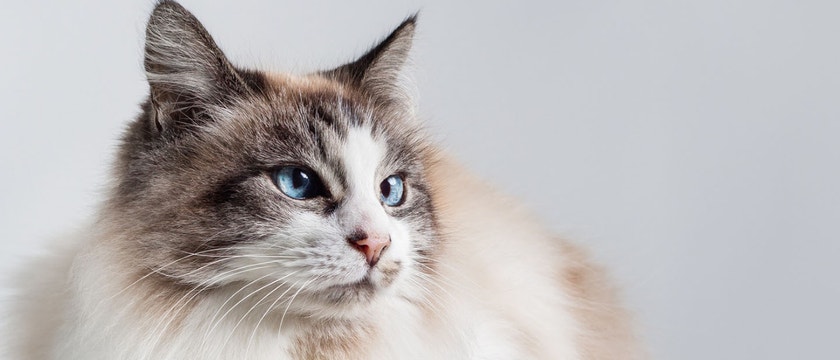
Ragdoll Cat
If you’re looking for a cat that is gentle, deeply affectionate, and utterly devoted to the people they love, the Ragdoll Cat might be your perfect match. Named for their endearing tendency to go limp and relaxed when picked up (just like a rag doll), these large, soft-hearted felines are as warm in personality as they are beautiful to look at.
Whether you’re thinking of welcoming Ragdoll kittens into your home or you’re already a proud fur parent to one of these stunning cats, this guide covers everything you need to know about the ragdoll personality, temperament, care needs, and more!
Ragdoll Cat Physical Appearance
The Ragdoll Cat is renowned for its striking and luxurious appearance. Purebred Ragdoll kittens are born solid white and begin developing their distinctive colors and patterns at around two months of age, with full coloration typically appearing by the time they reach two years old. Their medium-length coat is silky-soft and often compared to rabbit fur, featuring a fine undercoat that lies flat and naturally resists matting. The fur is usually thicker around the neck, creating a soft mane-like appearance, while fluffy hind-leg “trousers” and a long, feathered tail add to the breed’s elegant look.
Ragdoll color varieties include seal, blue, chocolate, lilac, cream, red, and fawn. In terms of size, Ragdolls are large and muscular cats with broad chests, sturdy legs, and large round paws. Their well-balanced heads, medium-sized ears, and signature large oval blue eyes make the breed instantly recognizable among cat lovers worldwide.
Ragdoll Cat Personality and Temperament
The Ragdoll temperament is one of the breed’s most celebrated traits. Calm, patient, and genuinely people-oriented, these cats thrive on companionship and are known for following their favorite fur parents from room to room. Ragdoll personality strikes a rare and beautiful balance as they can be affectionate without being demanding or playful without being overwhelming.
Below is a quick look at how this breed typically ranks across key traits. Having a clearer picture of their needs will help you decide whether this is the right cat breed(open in new tab) for your home.
Legend:
⭐ = Poor
⭐⭐⭐⭐⭐ = high/excellent
Trait | Rating |
Friendliness | ⭐⭐⭐⭐⭐ |
Ability to adapt | ⭐⭐⭐⭐⭐ |
Behavior towards other pets | ⭐⭐⭐⭐⭐ |
Behavior towards humans | ⭐⭐⭐⭐⭐ |
Playfulness | ⭐⭐⭐ |
Tendency to obesity | ⭐⭐⭐⭐ |
Overall health | ⭐⭐⭐ |
Life expectancy | ⭐⭐⭐⭐ |
Easy to train | ⭐⭐⭐⭐ |
Advisable for first-time owners | ⭐⭐⭐⭐⭐ |
Key Characteristics of Ragdoll Cats
Here are the key Ragdoll characteristics that make this breed truly one of a kind. Keep in mind these values can vary from cat to cat.
Table of Contents
Average lifespan | The Ragdoll lifespan usually ranges between 13 to 18 years. |
Weight | A Ragdoll Cat's weight typically ranges from 10 to 20 pounds. |
Height | The height for this cat breed is usually between 9 and 11 inches. |
Coat | They have medium-length and dense coats. |
Size | The average Ragdoll size is large due to its muscular legs, broad chests, and sturdy build. |
Personality | They are gentle, affectionate, and laid-back cats that love companionship. |
Origin | Ragdoll cats originated in California in the 1960s, developed by breeder Ann Baker |
Ragdoll Cat History
The history of the Ragdoll cat breed dates back to the 1960s in California. A breeder named Ann Baker developed the first Ragdoll cat from Josephine, a white long‑haired domestic cat whose ragdoll kittens displayed unusual docile temperaments and striking blue eyes. Baker selectively bred these cats to establish the Ragdoll’s signature traits and personality. The breed quickly gained popularity for its affectionate nature, making the history of the Ragdoll cat one of the most charming stories in feline breeding.
Types of Ragdoll Cats
Here are the Ragdoll cat types categorized by their coat colors and patterns:
Ragdoll Colors
Ragdolls come in a variety of colors like seal, blue, chocolate, lilac, cream, red, and fawn.
Ragdoll Patterns
Colorpoint: Darker points on ears, face, paws, and tail.
Bicolor: Inverted “V” on the face, white legs, and belly.
Mitted: White paws resembling mittens, with a white chin and belly stripe.
Van: Mostly white body with color restricted to ears and tail.
How Long Do Ragdoll Cats Live?
Ragdolls are generally healthy and long‑lived, with an average lifespan of 13-18 years. With proper care, some can live beyond 18 years. Regular veterinary checkups and a balanced diet help maximize their longevity.
How to Care for a Ragdoll Cat?
Ragdoll cats are generally healthy, but like many large breeds, they can face certain issues:
Weight Management
Ragdolls are prone to obesity. Measure daily food portions, limit treats to 10% of calorie intake, and encourage regular play to maintain a healthy weight.
Bladder Stones
Watch for blood in urine, crying in the litter box, or straining to urinate. Preventive care includes plenty of fresh water and routine vet checkups.
Hypertrophic Cardiomyopathy (HCM)
A genetic heart disease, which has no cure once developed. Breeders may use genetic testing, while owners should schedule echocardiograms for early detection.
Grooming & General Care
Their silky coat is low‑maintenance but benefits from brushing twice a week. Trim nails regularly and provide scratching posts to protect furniture.
Routine Vet Visits
Annual checkups (biannual for seniors) help catch issues early and keep your Ragdoll thriving.
Ragdoll Cat Grooming and Maintenance
Take note of these Ragdoll grooming and maintenance basics that every owner should know.
Ragdoll shedding is moderate compared to other long-haired breeds, and regular brushing helps manage loose fur.
Ragdolls have a single silky single coat which resists matting but brush at least twice a week to prevent tangles.
Trim nails regularly to keep them healthy. Provide a sturdy scratching post, especially after nail trims, to satisfy claw‑sharpening needs.
Clean ears regularly to avoid any ear infections(open in new tab).
Are Ragdoll Cats Suitable for Indoor Living in the Philippines?
Ragdolls thrive indoors, especially in tropical climates like the Philippines. Their semi‑long coat is not overly dense, making them comfortable in warm weather. Also, their docile and people‑oriented nature makes them ideal indoor companions.
Ragdoll Cat Nutrition and Diet
The ideal Ragdoll cat diet should center around complete and balanced cat food(open in new tab). Because this breed is prone to obesity, food quality and portion control matter more than average. Here's what to prioritize:
High-quality protein: Choose cat food made with quality protein sources like real fish or chicken.
Controlled portions: Ragdolls are not highly active cats, so overfeeding adds up quickly. Serve meals at consistent times and follow ideal feeding guidelines of your chosen cat food.
Hydration: Wet cat food(open in new tab) is an excellent addition to your cat's routine it supports hydration. Always ensure fresh, clean water is available.
Limit fillers: Avoid cat food with excessive grains or low-quality carbohydrates, which add calories without meaningful nutrition.
Whether you're raising Ragdoll kittens or an adult, serving the right food for Ragdoll cats and kittens sets the foundation for a long, healthy life.
Ragdoll Cats – The Perfect Addition to Your Home
Ragdolls are truly one of the most rewarding cat breeds to share your life with. From their graceful appearance to their calm, devoted personalities, these gentle giants make exceptional companions for any household. With the right care, nutrition, and lots of love, your Ragdoll will thrive and bring warmth to your home for years to come.
To give your feline companion the best possible life, keeping yourself posted with the best practices in cat health and nutrition is a must. For better cat parenting, take some time to visit the WHISKAS® blog today!