
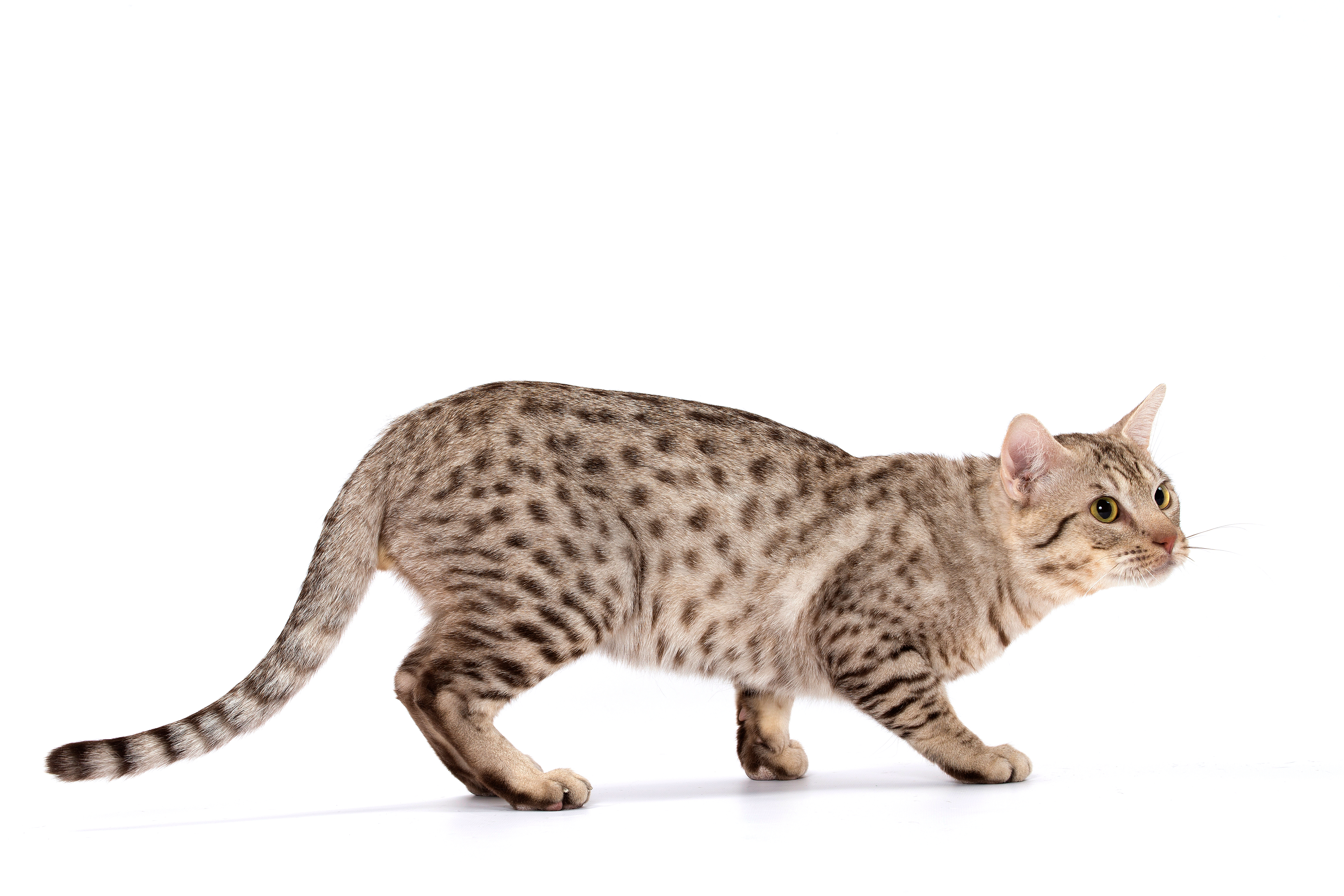
Savannah Cat
Savannah Cats are one of the most unique domestic cat breeds in the world. This hybrid cat is a cross between the African Serval and your typical domestic cat, resulting in a feline with a truly exotic appearance. With their tall frame, athletic build, and cheetah-like markings, Savannah Cats beautifully bridge the gap between wild elegance and domestic companionship.
Understanding the Savannah Cat temperament, behavior, and care requirements is essential for creating a safe and enriching environment where they can thrive. Whether you are considering adopting a Savannah Cat or simply want to learn more about this fascinating breed, this guide covers everything you need to know about Savannah Cat’s size, personality, lifespan, diet, care, and more.
Savannah Cats' Physical Appearance
Savannah Cats are instantly recognizable for their striking resemblance to wild cats. Tall, lean, and athletic, they are known for their cheetah-like appearance and graceful movement. Their longer-than-average legs, combined with a slender yet muscular build, give them a noticeably large and elegant frame. Savannah Cats also feature large upright ears, often marked with distinctive ocelli (eye-like spots) on the back. Their spotted or marbled coats, almond-shaped eyes, long necks, and sleek bodies further enhance their exotic appearance.
The Savannah Cat’s size is particularly impressive, with many standing between 14 to 18 inches tall, making them one of the tallest domestic cat breeds in the world. Paired with their athletic build and confident stride, their overall presence is both powerful and striking.
Savannah Cat's Personality and Temperament
One of the most endearing aspects of the Savannah cat temperament is how deeply bonded these cats become with their families. Bold, curious, and highly intelligent, Savannah Cats are known for following their favorite people like loyal companions.
Savannah Cat personality traits often resemble those of dogs more than typical house cats. They are energetic cats that thrive on interaction, play, and mental stimulation. However, because of their active nature, they may not always be ideal for first-time cat owners. Weighing the breed’s traits will help you identify the Savannah Cat’s pros and cons.
Legend:
- ⭐ = Poor
- ⭐⭐⭐⭐⭐ = High/excellent
Trait | Rating |
Friendliness | ⭐⭐⭐⭐ |
Ability to adapt | ⭐⭐⭐ |
Behavior towards other pets | ⭐⭐⭐ |
Behavior towards humans | ⭐⭐⭐⭐ |
Playfulness | ⭐⭐⭐⭐⭐ |
Tendency to obesity | ⭐⭐ |
Overall health | ⭐⭐⭐ |
Life expectancy | ⭐⭐⭐⭐ |
Easy to train | ⭐⭐⭐⭐ |
Advisable for first-time owners | ⭐⭐ |
Key Characteristics of Savannah Cats
Key Savannah Cat characteristics include their intelligence, athletic build, and their exotic markings. While every cat is unique, below are some of the breed’s common traits.
Average lifespan | Savannah Cats’ lifespan is usually between 12 to 20 years |
Weight | A Savannah Cat’s weight typically ranges from 12-25 lbs, depending on age and gender. |
Height | The height for this cat breed ranges from 14 to 18 inches |
Coat | They have short to medium, spotted, and marbled coats |
Size | A full grown Savannah Cat is large due to their tall, lean, and athletic build. |
Personality | They are intelligent, loyal, energetic, and adventurous |
Origin | Savannahs are a hybrid of the African Serval and the domestic cat |
Table of Contents
Savannah Cat History
The story of the Savannah Cat began in 1986, when breeder Judee Frank crossed a male African Serval with a female Siamese Cat. The resulting kitten, named Savannah, quickly attracted attention for its resemblance to wild cats. Breeders soon became interested in refining the breed to balance the Serval’s distinctive look with a more domestic temperament. In 1989, further breeding with a Turkish Angora produced viable F2 Savannah kittens, helping establish the foundation of the modern breed.
By the 1990s, the Savannah Cat had gained a devoted following among cat enthusiasts. In 2001, The International Cat Association (TICA) officially recognized and registered the breed. Savannah Cats are classified by filial generations — F1, F2, F3, and so on — which indicate how closely related a cat is to its Serval ancestor.
Types of Savannah Cats
F1 Savannah Cats
These cats have one Serval parent, which makes them 50% wild. They are the largest and most exotic bunch, often weighing 20–25 lbs.
F2 Savannah Cats
These Savannahs are two generations down from their pure Serval great grandparents, with just 25-35% of Serval genetics. They are still large and active but more manageable.
F3 Savannah Cats
With only 12-20% Serval genetics, F3 Savannahs have a more domesticated temperament and adjust to households easily.
F4 Savannah Cats and Beyond
This bunch of Savannahs can be considered fully domesticated cats. They retain the signature exotic appearance, but with calmer personalities.
How Long do Savannah Cats Live?
Savannah Cats have a lifespan of 12-20 years, depending on genetics, care, and environment. The earlier generation of these cat breeds might be more prone to health challenges due to hybridization but, with proper care, they can live as long as other domestic cats.
How to Care for a Savannah Cat?
Listed below are simple Savannah Cat care requirements:
Exercise
Since they are high-energy athletic cats, providing them with climbing structures, interactive toys, and regular play sessions will keep them active.
Training
While having high energy levels, these cats also respond well to training and commands. Savannah Cats training can include playing fetch, walking with a leash, or even playing in water.
Environment
Savannahs have an adventurous nature and thrive with lots of mental and physical stimulation. They may be hard to pin down and require secure indoor spaces, as they are skilled escape artists.
Companionship
These cat breeds thrive on human interaction and may become irritable when bored. They tend to form strong bonds and are very loyal to their masters.
Veterinary care
It is advisable to take them for regular health checkups and vaccinations. Especially, the early generations of Savannahs may face more health challenges than the others.
Savannah Cat Grooming and Maintenance
Savannah Cats have short coats that require minimal maintenance. They generally are easy to maintain, clean cats, but routine care is important:
- Generally low maintenance with coat care. Brushing once a week can help remove loose hair and debris.
- Get their nails trimmed every 2 weeks. Provide sturdy scratch posts to satisfy clawing needs.
- For dental hygiene, consider vet-approved products only.
- Give them an occasional bath. Savannah Cats are known to enjoy the water.
- Due to their large ears, make sure to clean ears regularly to avoid any ear infections.
Are Savannah Cats Suitable for Indoor Living in the Philippines?
Savannah Cats can adapt to indoor living in the Philippines, but with a few minor adjustments to their environment. The Savannah Cat breed needs spacious, well-ventilated indoor spaces with climbing structures for enrichment. They can tolerate the Philippines tropical climate, but it is best to avoid strenuous activity during peak heat hours. Also, secure windows and doors since Savannahs are skilled jumpers and climbers. As the Philippines has high humidity levels, always ensure that your Savannah Cat gets constant access to fresh water and good airflow.
Savannah Cat Nutrition and Diet
Like other cat breeds, the Savannah Cat’s diet should center around cat food that provides complete and balanced nutrition. Here's a list of the important nutrients to include in a Savannah Cat diet:
- High quality protein: These cats benefit from a high-quality protein diet, reflecting their wild ancestry. This breed benefits from meat-based, high-protein diets that reflect their wild ancestry.
- Avoid Fillers: It is best to avoid fillers like grains and other low-quality carbs in this cat's diet, since they do not contribute much to their nutritional requirements.
- Hydration: Always ensure clean drinking water is available at all times. Serving wet cat food can also help support good hydration.
On a side note, it’s important to prevent obesity in a full-grown Savannah Cat. Understanding healthy cat weight ranges, adjusting portion sizes, and consulting with your vet will ensure that your Savannah Cat stays happy and healthy.
Living With a Savannah Cat
Living with a Savannah Cat can be incredibly rewarding for pet parents who understand the breed’s unique personality and needs. These cats are intelligent, interactive, and deeply loyal companions that thrive in environments filled with activity and enrichment. However, their high energy levels, athleticism, and curiosity mean they require more engagement than the average domestic cat.
For experienced owners willing to invest time into training, play, and companionship, the Savannah Cat offers a truly unique bond that combines the elegance of a wild cat with the affection of a devoted family pet. If you’re looking to learn more about cat breeds, health, and more, make sure to visit the WHISKAS® blog!